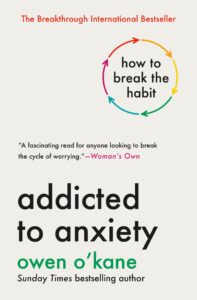
I’ve spent more than 25 years working in both physical and mental health, meeting thousands of people whose lives have been shaped, restricted, and often ruled by anxiety. I’ve studied it, spoken about it, and written about it. So you’d think that by the time I sat down to write Addicted to Anxiety, my fourth book, I’d be calm and in control. Ironically, it was the most anxious I’ve ever felt writing anything.
That familiar inner voice caught me off guard—whispering doubts I thought I’d outgrown. Stay small. Play it safe. Change the title—it’s too exposing. Maybe don’t write the book at all. It sounded protective, yet it was holding me back—just as it does for so many people I try to help.
The return of an old companion:
Growing up in Northern Ireland during the Troubles, anxiety was part of the air I breathed. You learned to scan the environment constantly—listening for tone, tension, and threat. That vigilance became second nature. Years later, even with decades of therapy and self-work, those ingrained protective patterns still linger. Anxiety isn’t something you cure; it’s something you learn to work with.
So when that inner voice returned while I was writing, I recognized it instantly. My brain was trying to keep me safe, as it always had. But it wasn’t keeping me safe anymore—it was keeping me stuck.
I had to choose: let anxiety take the wheel, or respect it enough to keep it in the passenger seat while I drive. The urge to suppress or distract myself was strong, but I knew that fighting anxiety only feeds it. The more we resist, the more it persists.
Practicing what I preach:
So I practiced what I preach. I turned towards the anxiety, acknowledged it, and thanked it for showing up. Because when you strip away the fear, anxiety is simply a sign your system is trying to protect you. It’s a message, not a monster.
Each morning as I sat down to write, I reminded myself this wasn’t just another professional project—it also has a deeply personal element. I poured my whole self into it: clinical knowledge, yes, but also the lived experience of someone who knows what it’s like to be consumed by overthinking, lost in worst-case scenarios, and endless what ifs.
There were days I wanted to walk away. But instead, I chose to channel that anxious energy—to use it as creative fuel. Anxiety became a collaborator, not an enemy. By the time I finished, I realized I’d written not only for anxious readers, but for the part of me that still struggles too.
The paradox of anxiety:
We live in a culture that tells us anxiety is a malfunction—something to conquer or silence. But that mindset keeps us stuck in its loop. The harder we fight, the stronger it grows.
When people tell me, “I just want to get rid of my anxiety,” I gently challenge that. You can’t delete a system built into your biology. What you can do is build a different relationship with it—one that turns down the volume and helps you live fully despite its presence.
Anxiety has a function: it’s our built-in radar for danger. The problem is, in modern life, that radar often misfires—reacting to an inbox, a deadline, or a social situation as if it were a genuine threat. The alarm rings even when there’s no fire.
We need to stop asking, “How do I get rid of anxiety?” and start asking, “What is it trying to tell me?” When you treat anxiety with respect, not resistance, it loses its grip. You regain control and the addiction is broken.
Why this book mattered:
I’ve sat in rooms with CEOs, teachers, actors, parents—all trapped by the same looping thoughts and fears that can keep us awake at night. Anxiety doesn’t discriminate. It’s universal. And if I’ve learned anything, it’s that freedom doesn’t come from eradicating anxiety—it comes from taking your anxious self by the hand and saying, We’re doing this anyway.
That’s what I did. I didn’t silence the voice telling me to stay small—I simply stopped letting it drive.
Addicted to Anxiety isn’t a book about fighting fear, but befriending it. It’s about seeing anxiety as a misguided protector that needs acknowledgment, not exile. In every sense, it was the hardest and most rewarding piece of writing I’ve ever done—because I wrote it for all of us, including me.
Interested in more? Addicted to Anxiety is available now!
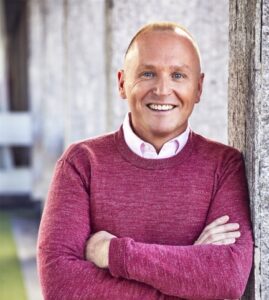
Owen O'Kane is recognized as one of the UK’s leading mental health experts. He is a practicing psychotherapist, a former NHS Clinical Lead, and a Sunday Times bestselling author. With a remarkable ability to simplify complex psychological concepts and mental health tools, he makes them both accessible and easy to understand. He speaks at wellness festivals and conferences, and frequently appears on TV, radio, and podcasts. He lives in West London with his partner Mark and their dog, Will.