When I was in graduate school studying to be a therapist, we learned about the nature of abuse and trauma, whether it be emotional, physical, or sexual. We never learned about financial abuse or financial trauma.
We learned about the importance of removing the stigma around mental health, but not around financial stress or struggle. We didn’t learn about the powerful interconnection between mental health and financial wellness, or how to treat and heal them together for holistic well-being and success.
I’m here to change that because countless people are suffering. I know because I’ve been there.
The Breakthrough I Didn’t Expect
Early on in my clinical practice, I noticed something curious. As clients made progress in therapy, they earned more money. Even though I was treating anxiety, depression, addiction, and more, client after client was coming to session reporting raises and promotions.
I wanted to know why! Especially because I was broke.
After reflecting on it, I realized it’s because in therapy we are always working on underlying self-esteem. When we embrace our worth, we show up in the world with more confidence and assertiveness. We expand our comfort zones. We advocate for ourselves, set healthy limits and boundaries, and negotiate.
All of this has a financial return.
My Story: From Scarcity to Abundance
I became very interested in the psychology of money. I had started a business with $500 and $50,000 of student loans. I made a thousand mistakes and ended up in cash-flow hell. I didn’t have enough money to pay my rent or staff on time.
My father was born during the Great Depression. He struggled with a scarcity mindset and money anxiety. When he lost his job, he became clinically depressed and suffered from binge eating disorder.
I recreated my childhood financial reality as an adult and suffered from panic attacks and insomnia as I experienced soul-crushing debt and faced bankruptcy.
Then I changed my life.
Using evidence-based tools from my clinical training and seeking the support we all deserve, I healed intergenerational financial trauma, reframed my money mindset, and transformed my life emotionally, relationally, and financially.
Breaking the Silence Around Money
My calling is to help others do the same.
Mental health and money are the last taboos, and I am here to break them—together. We need to talk openly about our mental health and financial stressors so we can support and heal together, rather than suffering in shame and silence.
According to the American Psychological Association’s 2025 report, money and the economy are top stressors for Americans. According to this Deloitte Gen Z and Millennial 2025 Survey, younger generations and parents are suffering from financial insecurity the most. You are not alone.
How Mental Health Impacts Financial Wellness
Unaddressed mental health issues impair financial wellness.
For example:
ADHD can make it difficult to organize finances
Depression can impair self-esteem, confidence, and motivation which all drivers of financial success
Anxiety and mania can lead to impulsive and compulsive spending
Addiction can destroy finances and lives along the way
We all have mental health, just as we have physical health. Our mental health is a normal response to our levels of stress, trauma history, self-care, and support. No shame, no stigma. Help is available and effective. It time to wrap ourselves with loving self-compassion and extend empathy and support to others who are struggling.
Financial Stress, Financial Trauma, and Money Anxiety
Financial stress can lead to money anxiety, or persistent worry about financial security.
Financial traumas—such as poverty, unemployment, foreclosure, unexpected healthcare expenses, a costly divorce or breakup, or business failure—can lead to financially triggered post-traumatic stress responses.
Financial stress can also trigger or exacerbate anxiety disorders, mood disorders, eating disorders, and substance use disorders.
According to Duke Health, 16% of suicides are financially driven. This is why addressing financial stress is not only life changing, it can be life saving.
It’s Not About Math: It’s About Mindset
The basics of money management aren’t rocket science. We know that we need to earn more than we spend and save and invest for the future.
It is our psychology that makes it challenging—just like with nutrition and exercise.
We know what to do. But because we are human, we often engage in self-sabotage and self-limitation.
A New Approach: The Financial Mindset Fix
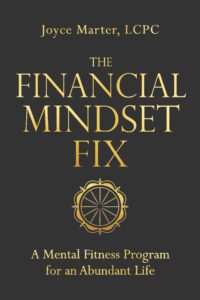
My book, The Financial Mindset Fix, is a step-by-step guide to doing the inner work required to create lasting and transformative change in your life.
Each chapter is based on one of twelve mindsets I identified after 25 years of counseling thousands of clients. Each is empirically supported to improve both mental well-being and financial prosperity.
I’ve been called the “Money Psychotherapist,” and I am here to help you heal your relationship with yourself and with money, because the two go hand in hand.
Real Results, Real Change
One reader told me her husband received a raise after Chapter One and a promotion after Chapter Five.
Many have told me the book should be mandatory reading for all.
My intention is to spread mental wealth. I teach mental fitness practices and how to leverage your psychology of money through products and services including my book, workbook, digital course, keynote talks, corporate trainings, coaching and consulting.
Won’t you join me in this mission? Check out The Financial Mindset Fix and spread the word today.

Joyce Marter, LCPC, is a psychotherapist, successful entrepreneur, adjunct faculty at Northwestern University, national speaker, and thought leader in mental health. She is the founder of Urban Balance, a nationwide counseling practice, and provides trainings on mental health and success for Fortune 500 companies. She has written for HuffPost, Spirituality & Health, and The Good Men Project, among others. She has been featured in countless media outlets, including CNN, MTV, and the Wall Street Journal. For more, see joyce-marter.com.