We have never been more connected to one another, and more disconnected from ourselves.
We can reach anyone at any time. We can access endless information in seconds. We can curate identities, build platforms, and respond to messages long after the workday ends.
And yet, beneath the noise, many adults carry a quiet confession: “I don’t know who I am anymore.”
We are raising children, building careers, caring for aging parents, navigating global instability, and absorbing a steady stream of anxiety — all while being praised for pushing through.
Productivity is celebrated. Exhaustion is normalized. Over-functioning is rewarded.
Somewhere along the way, many of us learned to override ourselves.
There was a version of me who didn’t.
She wrote fourteen short stories one summer and wished for a Trapper Keeper to organize them. She climbed trees and ran barefoot through sprinklers. She cried when she was sad and asked for help when she was scared. She never worried about being too much or not enough.
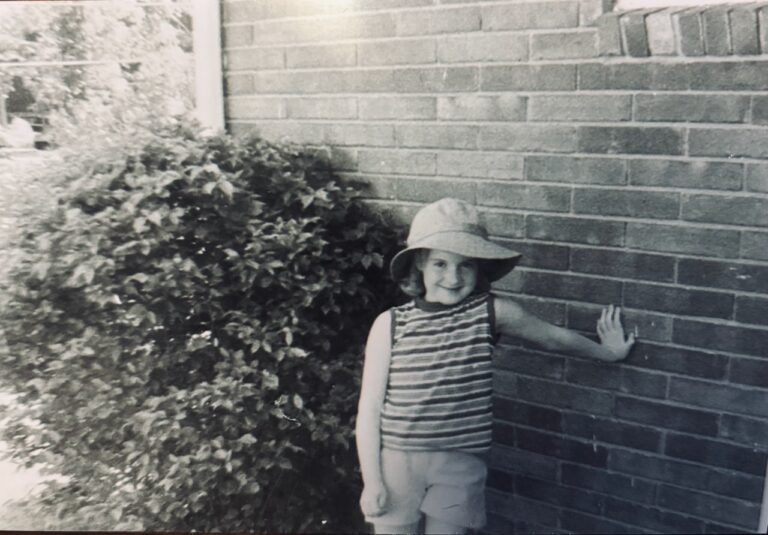
But somewhere between achievement and responsibility, I stopped listening to her.
It took one of my lowest parenting moments — sitting in my car in my pajamas after a late-night outburst that frightened even me — to see what I had lost. Pressing my bare foot against the gas pedal, desperate for escape, I was suddenly back beneath the oak in my childhood yard in Iowa.
“Remember me?” that younger voice seemed to ask.
In that moment, I didn’t need an escape as much as a reconnection.
I have since discovered I am not alone in that loss.
In my work with women across the country, I hear the same ache. We have become efficient, dependable, responsible — and estranged from our internal cues. When we disconnect from ourselves, our relationships suffer. We react instead of respond. We grow numb instead of present. We turn critical instead of compassionate.
The good news is this: what we once knew about ourselves has not disappeared. It is just waiting to be recovered.
Here are five countercultural ways to begin reclaiming your authentic self and strengthening your connections in the process.
1. Stop Measuring Your Value by How Much You Can Carry
Many of us were praised early for being capable. We handled what others could not. We became the steady one, the strong one who doesn’t fall apart.
But constantly carrying more than is ours erodes connection — first within, then outward. When we are overloaded, we react quickly. We snap. We withdraw. We resent.
In a culture that equates worth with output, it is radical to ask: What is actually mine to carry right now?
When you put something down, your hands are free again. You have room for your energy and your peace to return.
2. Let Your Body Be Your Guide
We are taught to override hunger, fatigue, grief — even joy. We scroll instead of sleep. We multitask instead of being present. We postpone our own care.
But the body does not lie. It whispers long before it shouts.
I did not explode that night because I was a bad parent. I had been pushing past my limits for months. My body finally said, “Enough.”
Burnout, irritability, and numbness are not character flaws. They are warning flares your body is sending from the inside out.
The more attuned we are to what is happening inside us, the less likely we are to collide with the people around us. Listening to your body is preventative care for your relationships.
3. Name What Is True for You
Many adults are fluent in meeting expectations but disconnected from their own longings.
We ask what is practical, what will keep everyone comfortable, what will look successful. In doing so, we often ignore the quieter question: What feels true?
The answers to this question do not have to be dramatic. Sometimes the responses are simple:
I am tired.
I need help.
I miss who I used to be.
I want something different.
When we silence what is true for us, it shows up sideways as resentment, volatility, or quiet despair.
Naming truth restores integrity inside your own skin. And when you are internally aligned, your relationships are steady too.
4. Remember Who You Were Before You Were Evaluated
Before there were resumes and performance reviews and social comparison, there were instincts.
There was a version of you who explored without measuring yourself, created without monetizing, and cried without apologizing.
We often dismiss that version as childish. But what if she was wise?
Reconnection is not about becoming someone new. It is about reclaiming parts of yourself that were abandoned.
When you trust your inner knowing, you are less driven by outside approval. You show up more grounded and open. Relationships deepen because you show up as yourself.
5. Leave Space Before You Hit the Wall
Not too long ago, my husband placed a target on the garage floor so I would know when to brake before hitting the wall. For years, I misjudged the distance and left small dents behind. Eventually, I realized I was doing the same thing in my life.
Our culture rewards acceleration and treats burnout as normal. But space is wisdom.
Space between stimulus and response.
Space in the calendar.
Space to ask: What is true here?
Without space, we collide — with walls, with people, with ourselves.
With space, we choose.
In a culture of speed and self-abandonment, staying connected to yourself is radical. This is not self-absorption. It is relational responsibility.
When we reconnect with the truest parts of who we are, we become steadier partners, wiser parents, braver leaders, and more compassionate neighbors.
In my book Soul Shift, I explore the process of returning to the parts of ourselves we buried in the name responsibility productivity and people pleasing. The journey is not about reinvention. It is about remembering.
You are not broken.
You are disconnected.
And it is not too late to come home to yourself.
Interested in more? Soul Shift is available now!

Rachel Macy Stafford is the New York Times bestselling author of Hands Free Mama, Hands Free Life, Only Love Today, and Live Love Now. Rachel is a certified special education teacher whose personal strategies are universal invitations to embrace life with urgency and cultivate connection despite the distractions of our culture. Her blog and social media platform are sources of inspiration to millions. For more, visit handsfreemama.com.